
Technology
What Democrats Can Learn From New York’s Data Center Moratorium
By Katherine Langford
Advertisement · Why this ad?
Marcus manages the day-to-day editorial workflow across all brands, coordinating coverage assignments and ensuring editorial standards are met. He previously served as city editor at the Pioneer Press and holds a degree in Political Science from Carleton College.
More from Marcus →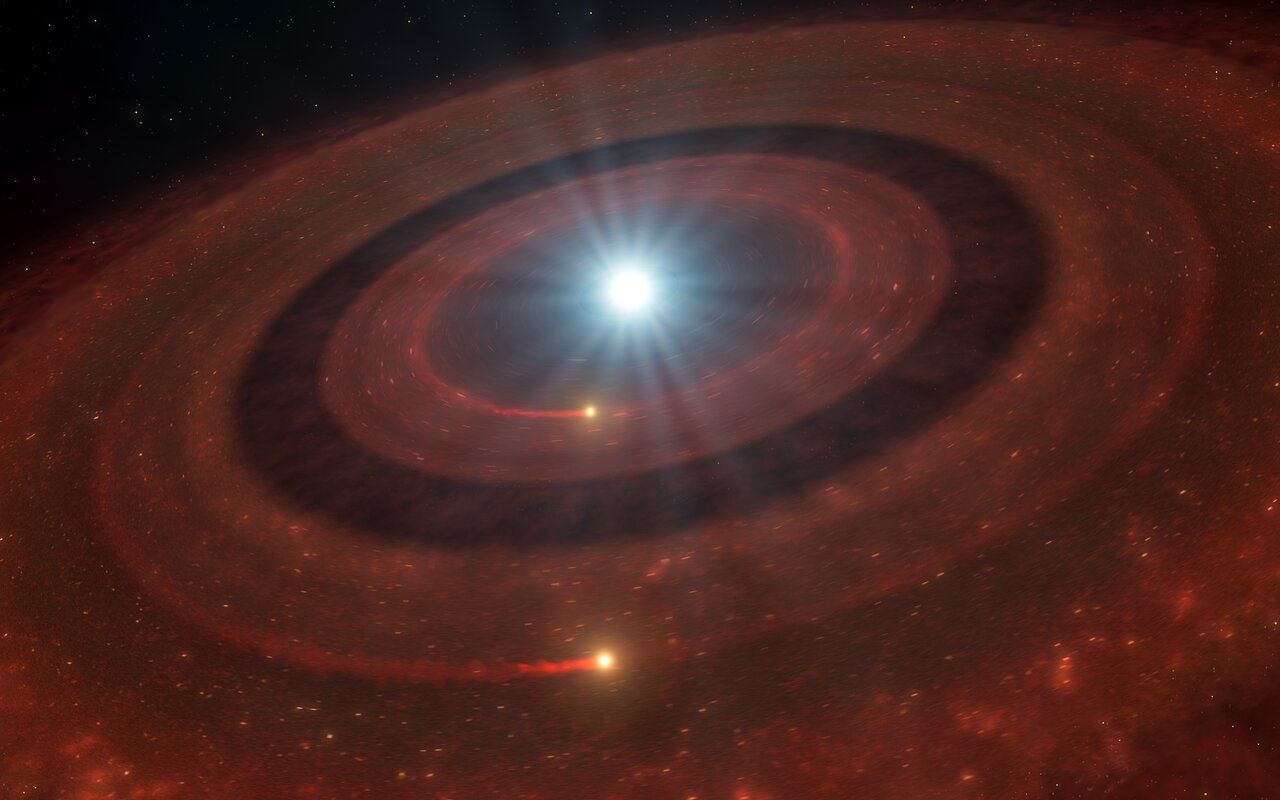
On a clear night in New York City, stargazers gaze up at the cosmos, unaware of a dying star 1,600 light-years away that offers a glimpse into the future of our solar system. This celestial body, known as a red giant, is surrounded by two rings of gas and dust, remnants of the planetary bodies it once nurtured. For astronomers, this discovery is not just a scientific marvel; it’s a window into the inevitable fate awaiting our own solar system.
Recent observations have revealed that the red giant star, located in the constellation of Cygnus, is shedding its outer layers, creating a spectacular display of cosmic debris. The two rings of gas and dust serve as a stark reminder of the life cycle of stars and the potential end of planetary systems. This phenomenon showcases how stars evolve, and ultimately, how they leave behind traces of their existence.
Scientists believe that the rings are formed from the remnants of planets that were once part of the star's system. As the star ages, it expands and engulfs nearby planets, breaking them apart and scattering their materials into space. This cosmic event provides critical insights into the processes that govern stellar evolution and planetary formation.
The discovery of this dying star and its surrounding debris is significant for several reasons. Firstly, it enhances our understanding of the life cycle of stars, particularly how they transition from main sequence stars to red giants and ultimately to white dwarfs. The study of such stars allows astronomers to piece together the complex puzzle of stellar evolution.
Moreover, the rings of gas and dust offer a unique opportunity to study the chemical composition of these materials, which can inform us about the building blocks of planets and potentially, life itself. As we analyze the elements present in the debris, we can draw parallels to our own solar system and the origins of Earth.
This discovery raises important questions about the future of our solar system. Scientists estimate that in approximately 5 billion years, our sun will undergo a similar transformation, expanding into a red giant and possibly engulfing the inner planets, including Earth. This cosmic timeline emphasizes the transient nature of celestial bodies and the inevitability of change.
Understanding the fate of other solar systems can help us prepare for our own. As we witness the transformation of distant stars, we gain insights into how to protect our planet and ensure the continuation of life, even in the face of cosmic upheaval. The knowledge gained from studying this dying star can inform strategies for planetary defense and long-term survival, should humanity still exist in billions of years.
The implications of this discovery extend beyond the realm of science. For the residents of New York City, a place rich in cultural diversity and innovation, this cosmic phenomenon serves as a reminder of our place in the universe. Local astronomy clubs and educational institutions are already planning events to share this knowledge with the community.
Organizations like the American Museum of Natural History are gearing up to host public lectures and stargazing events, allowing New Yorkers to engage with the cosmos. Such initiatives foster a sense of wonder and curiosity, encouraging families to explore science together. For instance, the museum's Hayden Planetarium often features programs that connect cosmic phenomena to local cultural narratives, making the science accessible and relevant.
Furthermore, local schools are integrating astronomy into their curricula, allowing students to learn about the universe's mysteries while fostering critical thinking and scientific inquiry. Programs like the NYC Department of Education's STEM initiatives are encouraging students to participate in astronomy clubs and science fairs, where they can present their findings and engage with experts in the field.
In addition, community centers across NYC are planning workshops that focus on hands-on activities related to astronomy, such as building simple telescopes or conducting experiments that illustrate the principles of stellar evolution. These programs aim to demystify science and make it more approachable for children and adults alike.
As astronomers continue to study this dying star and its surrounding debris, future research will likely focus on the specific processes that lead to the formation of such rings. Understanding the dynamics of these materials can help us refine our models of star evolution and planetary destruction. The ongoing observations will be crucial in determining whether the processes observed in this distant star are unique or if they can be found in other systems.
Additionally, this discovery could pave the way for new technologies in space observation. As telescopes become more advanced, we can expect even greater insights into the life cycles of stars and their planetary systems. The upcoming James Webb Space Telescope is expected to provide unprecedented views of such phenomena, allowing scientists to gather data that was previously unattainable.
Moreover, the collaboration between international space agencies, such as NASA and the European Space Agency, will likely enhance the scope of research in this area. Joint missions and shared data could lead to breakthroughs in our understanding of cosmic events and their implications for planetary systems.
The exploration of cosmic phenomena like the dying star in Cygnus goes beyond scientific curiosity; it speaks to the fundamental questions of existence and our place in the universe. For many, understanding the life cycles of stars offers a philosophical perspective on life, death, and renewal. It prompts us to reflect on our own lives and the legacies we will leave behind.
In a city as bustling and diverse as New York, this discovery can serve as a catalyst for conversations about sustainability and our responsibility toward the planet. As we learn more about the fate of celestial bodies, we are reminded of the importance of protecting our own environment and the delicate balance that sustains life on Earth. It encourages community members to engage in discussions about climate change, conservation, and the future of our planet.
The discovery of a dying star surrounded by cosmic debris is not just an astronomical event; it is a profound reminder of the cycles of life and death in the universe. As we look to the stars, we are reminded of our own mortality and the importance of cherishing our time on Earth. This cosmic tale encourages us to foster strong families and communities, as we navigate the inevitable changes that life brings.
In the face of uncertainty, it is our relationships, our faith, and our commitment to one another that will anchor us. As we continue to explore the universe, let us also focus on building a legacy of love and stability for future generations. The lessons learned from the cosmos can inspire us to take better care of our planet and each other, ensuring that we leave behind a vibrant world for those who come after us.
By Katherine Langford

By Marcus Chen

By Marcus Chen

By Katherine Langford