Business
India's unemployment rate falls to 5.1% in July-Sept
By Marcus Chen
Advertisement · Why this ad?
Katherine oversees editorial operations across all six brands. Before joining The Meridan Group, she spent 14 years at the Minneapolis Star Tribune, where she led the metro desk through its digital transformation. She holds a Master's in Journalism from Northwestern's Medill School.
More from Katherine →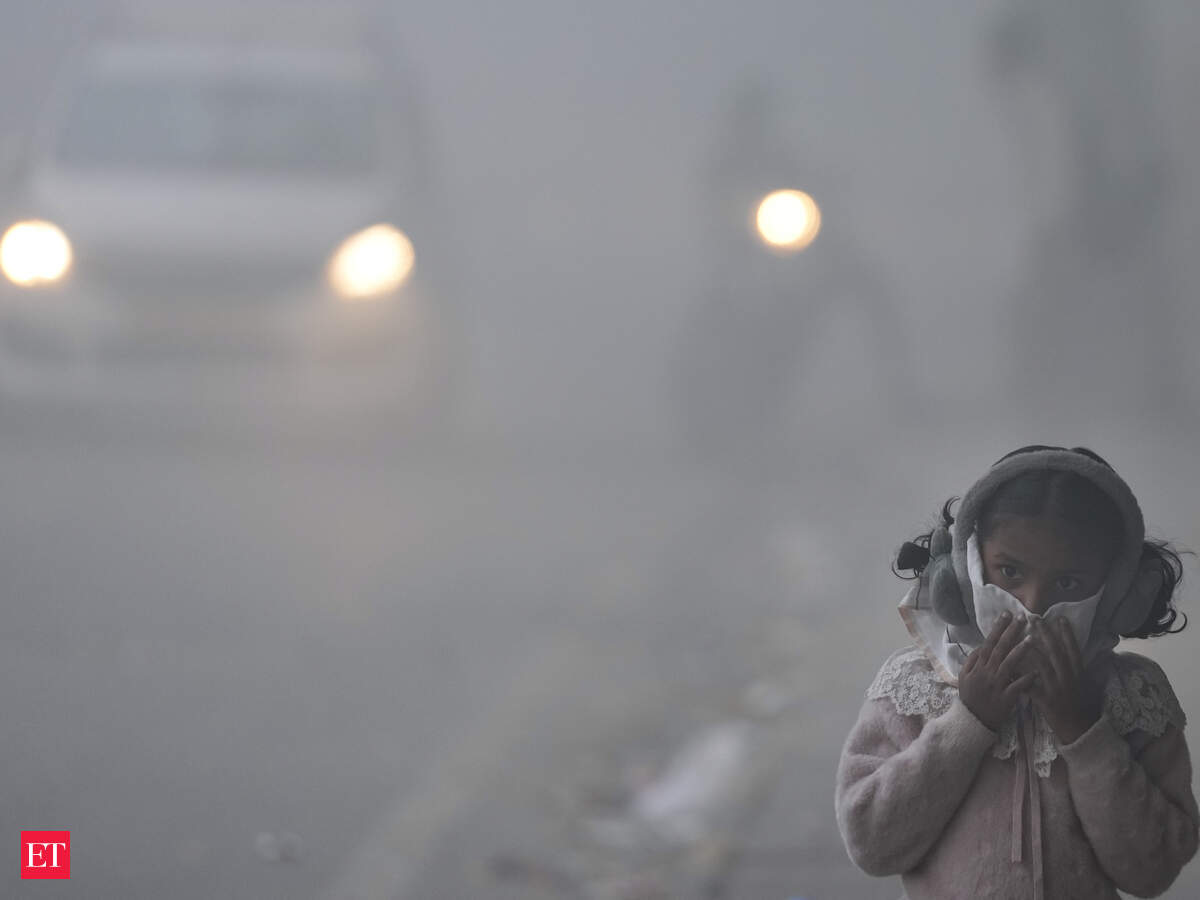
PTI New Delhi: Most of the missing air quality data from Delhi Pollution Control Committee (DPCC) monitoring stations on Diwali night was updated, revealing alarmingly high concentrations of particulate matter during the early hours of Monday, with readings at some locations soaring several times above the prescribed limits. However, gaps in the official pollution data persisted, with some particulate matter readings still unavailable and data from Central Pollution Control Board (CPCB) monitoring stations remaining missing, raising concerns over the completeness and reliability of the air quality records, experts said. At RK Puram, for instance, PM2.5 levels surged to 2,389 micrograms per cubic metre at midnight, nearly 40 times the prescribed limit of 60 micrograms per cubic metre. PM2.5, fine particulate matter that can penetrate deep into the lungs and enter the bloodstream, is a major pollutant of concern because of its harmful effects on human health. PM10 concentration at the station touched 2,881 micrograms per cubic metre at the same time, against the permissible limit of 100 micrograms per cubic metre. Live Events At Anand Vihar, PM10 concentration peaked at 3,490 micrograms per cubic metre at 2 am on Monday, while PM2.5 levels reached 1,670 micrograms per cubic metre around the same time. Ashok Vihar, which had earlier reported four hours of missing data, subsequently updated its readings. PM10 levels there peaked at 3,425 micrograms per cubic metre at 2 am, while PM2.5 concentration touched 2,589 micrograms per cubic metre around the same time. At the Commonwealth Sports Complex monitoring station, which had earlier shown nine hours of missing data, PM10 levels peaked at 2,928 micrograms per cubic metre at 5 am, while PM2.5 reached 2,471 micrograms per cubic metre at 4 am. Dwarka Sector 8, which had earlier recorded eight hours of missing data, showed only one hour of gap around 8 am on Monday in the revised PM10 readings. The station recorded a peak PM10 concentration of 2,196 micrograms per cubic metre at midnight, while PM2.5 levels peaked at 1,996 micrograms per cubic metre at 6 am. However, some readings were still unavailable on Tuesday. For instance, the PM10 data for one hour at the RK Puram monitoring station on Diwali night remained missing. A toxic haze engulfed Delhi on Diwali night as pollution levels soared and firecracker restrictions were brazenly flouted. The national capital recorded its most polluted Diwali in five years, exposing glaring enforcement failures and raising serious concerns over the health risks faced by Delhiites. Several monitoring stations went offline on Sunday night during the peak period of firecracker use in the national capital, raising questions over the reliability of the AQI tracking exercise itself. An analysis of hourly PM2.5 data from the city's 59 monitoring stations showed that while only one station was not reporting readings at 7 pm on Sunday, the number rose to 36 by 1 am on Monday, leaving readings available from just 23 stations. Manoj Kumar, an analyst at the Centre for Research on Energy and Clean Air (CREA), said CPCB data for the night was still unavailable. Sunil Dhaiya, founder and lead analyst at Envirocatalysts, said DPCC's monitoring stations had recorded PM2.5 concentrations exceeding 1,000 micrograms per cubic metre at 20 stations for a cumulative 126 hours on Diwali night, with the highest reading of 3,744 micrograms per cubic metre recorded at Mundka. "None of it shows in CPCB's data, which nearly halves the true peak. If the worst hours go missing, we misjudge both the health risk to people and whether our policies are working, so complete, uncapped and transparent data is non-negotiable," he said. Meanwhile, neurologist Rahul Chawla said exposure to fine particulate matter could have both short-term and long-term health consequences, particularly for vulnerable groups. "PM2.5 is a particulate matter whose size is much smaller than our nasal hair and that is why it cannot be filtered properly. Through our lungs, it reaches different parts of our body," he said. He said exposure could trigger inflammatory changes and increase the long-term risk of neurological conditions, including dementia and stroke. "Multiple studies have come forward which show that exposure to PM2.5 increases chances of heart attack and stroke," he said, adding that children, elderly people and those suffering from asthma or chronic obstructive pulmonary disease (COPD) were particularly vulnerable. He also flagged concerns over prolonged exposure among pregnant women, saying studies had indicated possible links between particulate matter exposure and developmental risks in children. On Monday, data from Delhi's 59 monitoring stations had shown substantial gaps in hourly readings between midnight and 9 am. Commonwealth Sports Complex, Jawaharlal Nehru Stadium, NSUT Jaffarpur and RK Puram had recorded the highest gaps, with nine hours of missing data each. Dwarka Sector 8, IIT Delhi, Jawaharlal Nehru University, Pusa (IITM), Talkatora Garden and Uttam Nagar had reported eight hours of missing readings each. The gaps had raised concerns over the availability and transparency of official air quality data during the period of peak pollution following Diwali. Experts have stressed that complete and reliable monitoring data is essential to assess actual pollution exposure, issue public health advisories and evaluate the effectiveness of pollution control measures. On Monday, the opposition Aam Aadmi Party accused the Delhi government of "data fraud", alleging that it was manipulating air quality readings to understate pollution levels. Add as a Reliable and Trusted News Source Add Now! (You can now subscribe to our Economic Times WhatsApp channel ) Read More News on Delhi air pollution Diwali pollution data health risks of PM2.5 CPCB monitoring stations Delhi Pollution Control Committee AQI tracking exercise (You can now subscribe to our Economic Times WhatsApp channel ) Read More News on Delhi air pollution Diwali pollution data health risks of PM2.5 CPCB monitoring stations Delhi Pollution Control Committee AQI tracking exercise Prime Exclusives Investment Ideas Stock Report Plus ePaper Wealth Edition Business of Odd Things: The farm that needs no land, freshwater, or fertiliser KYC and KYB: Inside Pidilite, the company that turned Fevicol into a word for a strong bond – Part 1 of 3 Seoul halts trading, Nifty has its best week since 2021: Money leaving the AI trade – will it land in India? Junk bonds are cracking at the bottom. Will the noise get loud enough to make ‘junk bond’ a household term again? PNG connections rise half a million, but how many use piped gas for cooking? Some elections matter more than you know: No crop changed in the fields, yet sugar, coffee and soya got cheaper in a day 1 2 3 View all Stories
By Marcus Chen

By Katherine Langford

By Katherine Langford

By Katherine Langford