
Business
Sonia recalls Sanjay Gandhi's role during Emergency
By Katherine Langford
Advertisement · Why this ad?
Katherine oversees editorial operations across all six brands. Before joining The Meridan Group, she spent 14 years at the Minneapolis Star Tribune, where she led the metro desk through its digital transformation. She holds a Master's in Journalism from Northwestern's Medill School.
More from Katherine →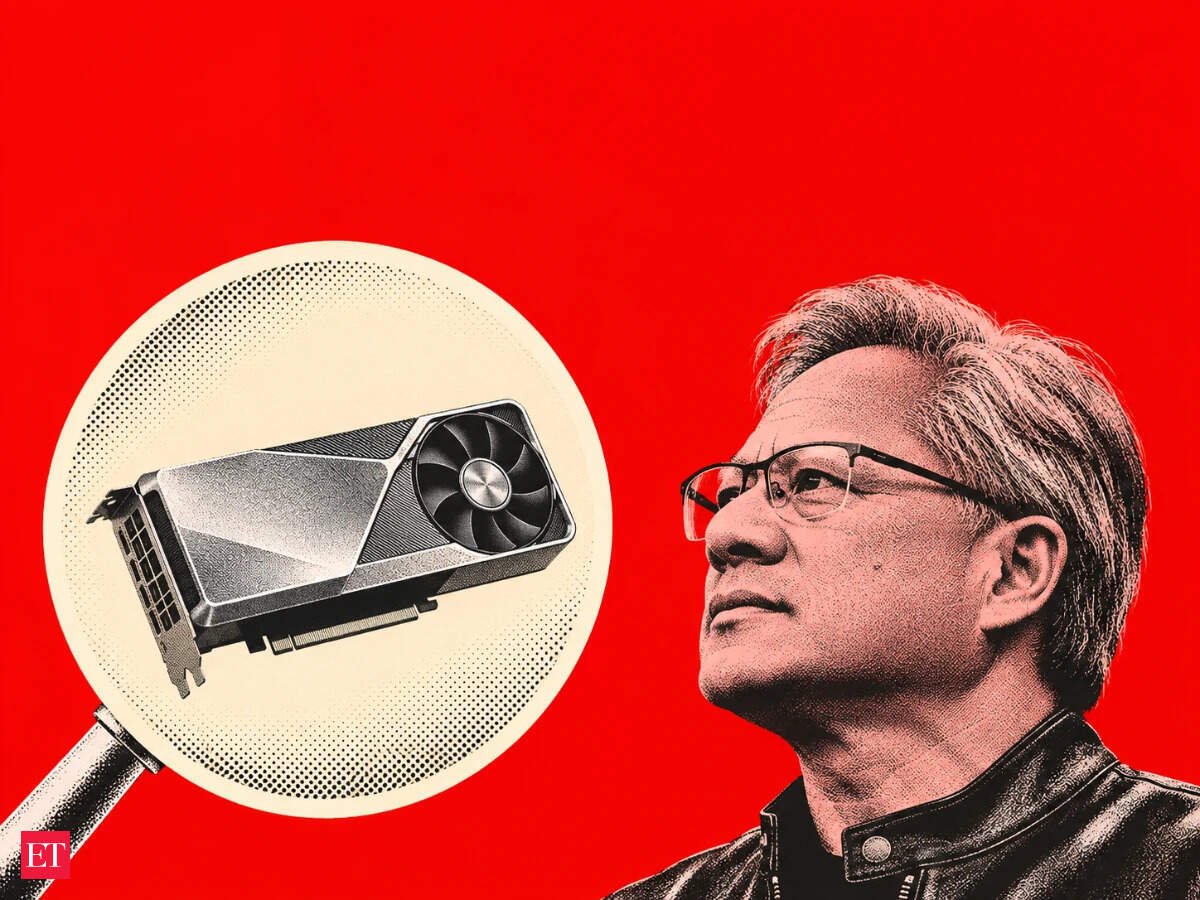
ET AI Two US senators from opposing parties have called for tighter congressional oversight of advanced chip exports to China following the recent controversy around Nvidia chief executive Jensen Huang . In a November 9 joint statement, Democrat Elizabeth Warren and Republican Jim Banks urged the Congress to include the AI Overwatch Act in the annual defence bill. The Act aims to give lawmakers greater oversight of such exports. “Nvidia CEO Jensen Huang’s confirmation of a relationship with a suspected spy for China’s intelligence service makes these national security concerns even more urgent and raises important questions Nvidia must answer about the extent to which these activities were related,” the senators said in the statement. Also read: The Jensen and Alice story: What happened in the 2024-26 secret affair of the NVIDIA CEO and a 'Chinese spy' The statement further read: “It is time for Congress to take decisive action to pass key bills like the AI Overwatch Act in the NDAA (National Defense Authorization Act) that will cut off pathways through which China accesses advanced chips. The Commerce Department should complement these efforts with immediate action to close export control loopholes and ensure that advanced AI chips are not going to China’s military.” Live Events The senators’ call came a day after Nvidia’s board opened an investigation into reports that a member of a foreign intelligence service had targeted Huang. In October, The New York Times first reported Huang’s linkages with Alice Huang , an executive associated with Singapore cloud provider Megaspeed International . The Times reported that US intelligence officials concluded she was gathering information for Beijing. However, China’s foreign ministry dismissed the spying allegations as a smear. In a letter to his employees over the weekend, Jensen acknowledged being unfaithful to his wife. He did not name the other person and said he would support and fully cooperate with the investigation. “I was unfaithful to my wife. My actions hurt her and our children. There is no excuse for what I did. I am deeply sorry,” Huang wrote. Also read: Nvidia's 700,000% return faces a succession test amid Huang's China spy affair Nvidia’s board said it had no reason to believe that US national security or company secrets were compromised. “A committee of independent directors, assisted by outside independent counsel, will oversee the investigation. The Board prioritizes US national and economic security, which is paramount to the interests of Nvidia and its shareholders,” the board said. Following the chips trail to Southeast Asia Megaspeed first drew Washington’s attention in October 2025 when Senator Tom Cotton asked the US Commerce Department to investigate possible chip diversion, citing reports that traced the firm’s business across several countries. While the cloud provider was based in Singapore, the Nvidia chips in the processors were in data centres in Malaysia and Indonesia, and some customers appeared to be accessing them remotely from China. Inspectors could count the chips in a data centre, but the inventory alone could not tell them who was using the machines. Washington has restricted exports of advanced AI chips to China since 2022. Meanwhile, trade records from ImportGenius, cited by The New York Times, show that between June 2024 and February 2026, Megaspeed’s Malaysian sister company bought at least $4.8 billion worth of advanced AI equipment containing Nvidia chips and technology. Nvidia told Reuters at the time of Cotton’s request that it had investigated the matter, discussed Megaspeed with the US government and found no reason to believe its products had been diverted. Bloomberg reported earlier this month that hardware partners supplied the chips to Megaspeed and Nvidia visited 12 facilities run by eight operators across three Southeast Asian countries to check the inventory. Also read: How China gets the Nvidia chips it needs to develop AI To be sure, Bloomberg compared trade records with the figures Nvidia initially provided to US officials and reported a gap of about 50,000 chips between the number sold through hardware partners and the number Nvidia accounted for during its checks. In December 2025, Nvidia told Bloomberg it had located additional hardware in warehouses but declined to say how many chips it had found. Meanwhile, Megaspeed also pushed back against suggestions that it transferred chips illegally. In a November 9 statement, the company said the US Commerce Department’s Bureau of Industry and Security, Malaysia’s trade ministry and Nvidia had jointly inspected its operations in the preceding six months. Megaspeed said the inspections found no evidence of illegal transfers or other violations. Joining the dots of the probe In 2025, Nvidia’s general counsel Tim Teter called Jeffrey Kessler, the US official overseeing chip export controls, about Singapore’s detention of Alice Huang for questioning. Citing people familiar with the conversation, Bloomberg reported that Teter asked whether Kessler’s agency had been involved in her detention. Nvidia told Bloomberg that Teter was unaware of the affair when he made the call. In an October 29 interview with Bloomberg, Jensen Huang described Nvidia’s dealings with Megaspeed as “normal and not unusual” and said the chipmaker had checked whether its customer had illegally sent processors to China. US lawmakers have also asked what information cloud customers could obtain through their contacts with Nvidia. According to a Reuters report, the chairs of three US House committees asked Huang to brief them on November 18 about the Times report and Nvidia’s safeguards against foreign espionage. Also read: Jensen Huang's price of secret affair: NVIDIA CEO loses $7.4 billion in 30 minutes, drops 2 spots in top 10 richest list Nvidia told Reuters that its Asian cloud customers received routine business information and no sensitive trade secrets or information relevant to US national security were shared with them. The controversy has also renewed calls for chip suppliers to track their products after a sale. On November 9, Representative Bill Foster urged the Congress to pass the Chip Security Act , a separate bill he co-sponsored that, according to Reuters, would require companies to track chips to tackle smuggling. The Information Technology Industry Council, whose members include Nvidia, has argued that the proposed restrictions could complicate US export policy and hurt US competitiveness. Add as a Reliable and Trusted News Source Add Now! Read More News on Jensen Huang Nvidia Nvidia controversy Nvidia China chip exports AI chip export controls AI Overwatch Act Chip Security Act Megaspeed International Alice Huang Read More News on Jensen Huang Nvidia Nvidia controversy Nvidia China chip exports AI chip export controls AI Overwatch Act Chip Security Act Megaspeed International Alice Huang Prime Exclusives Investment Ideas Stock Report Plus ePaper Wealth Edition Business of Odd Things: The farm that needs no land, freshwater, or fertiliser KYC and KYB: Inside Pidilite, the company that turned Fevicol into a word for a strong bond – Part 1 of 3 Seoul halts trading, Nifty has its best week since 2021: Money leaving the AI trade – will it land in India? Junk bonds are cracking at the bottom. Will the noise get loud enough to make ‘junk bond’ a household term again? PNG connections rise half a million, but how many use piped gas for cooking? Some elections matter more than you know: No crop changed in the fields, yet sugar, coffee and soya got cheaper in a day 1 2 3 View all Stories
By Katherine Langford

By Marcus Chen

By Marcus Chen

By Katherine Langford