
Technology
This Startup Is Betting on AI Microdramas to Get More Black Stories in Hollywood
By Marcus Chen
Advertisement · Why this ad?
Katherine oversees editorial operations across all six brands. Before joining The Meridan Group, she spent 14 years at the Minneapolis Star Tribune, where she led the metro desk through its digital transformation. She holds a Master's in Journalism from Northwestern's Medill School.
More from Katherine →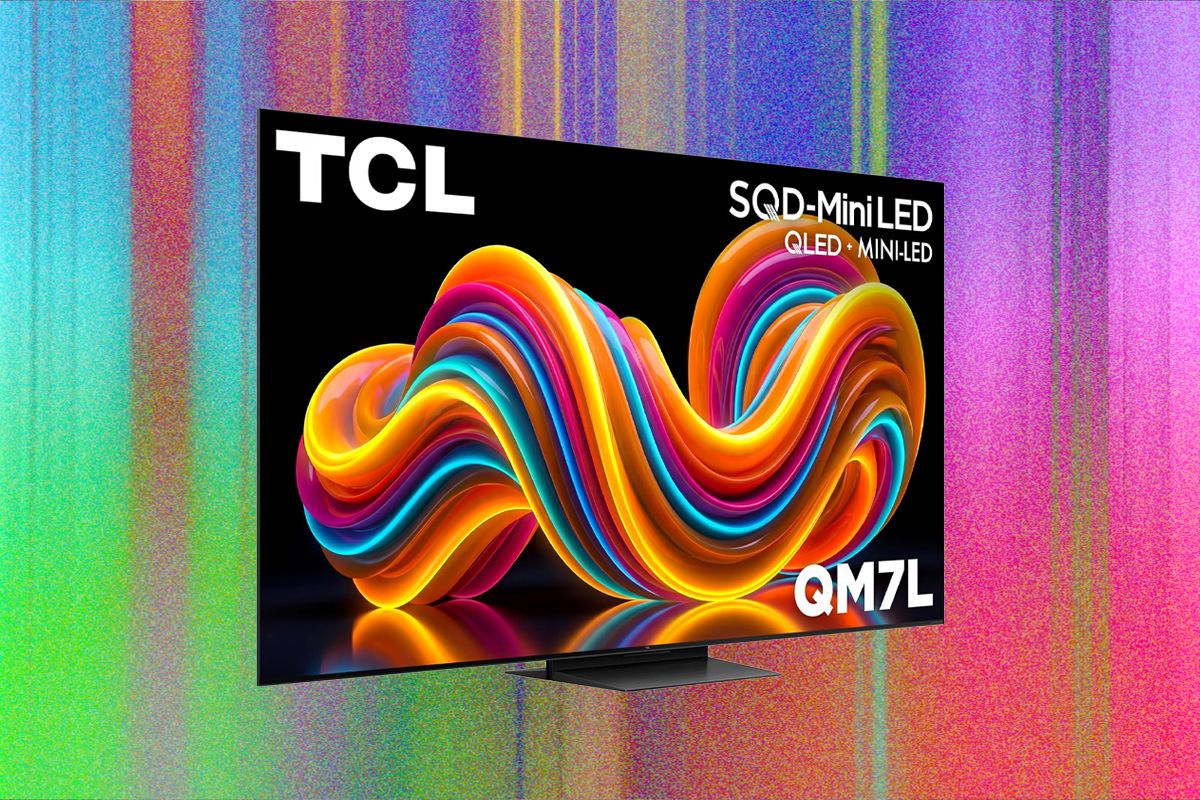
TriangleUp Buy Now Multiple Buying Options Available $1,500 $898 at Amazon $1,500 $900 at Best Buy Save Story Save this story Save Story Save this story Rating: 8 /10 Open rating explainer Information WIRED Amazingly good color and black levels, very close to OLED quality. Bang & Olufsen speakers sound better than most. The remote is backlit. TIRED Pedestal stand can get in the way of soundbars. Arrives with motion-smoothing enabled. Google Gemini needs a little more usability and hands-free control. Are we entering the era of TV “dupes”? Because to the untrained eye, or even a reasonably trained one, it’s hard to distinguish TCL’s mini-LED-powered QM7L from a lower-end OLED. So when your brother-in-law plops down in front of your new TV to watch the Lions and says, “Wow, you splurged, eh?” you can just nod and give a wink. Dupe accomplished. I know this because the QM7L arrived close on the heels of a new budget OLED, the Roku Pro Series , so I was able to compare the two side by side. Results: surprising. Although it has a potentially problematic design element and an AI that’s not exactly Claude-level sophisticated, the QM7L might just be the best midrange TV you can buy right now. Simple Setup, But Where Does the Soundbar Go? Available in sizes ranging from 55 inches (which I tested) to a mammoth 98 inches, the QM7L boasts a virtually borderless screen that stands on a pedestal instead of the usual feet. That’s a win if you own a small piece of furniture that might not accommodate the width of such feet, and I’d argue it’s more aesthetically pleasing too. However, it does pose a problem: Because the pedestal base sticks out in front by a little over 4 inches, it doesn’t allow a soundbar to sit snug up to the screen. You could balance it on top of the base, but that looks awkward. And because it slopes down, the soundbar doesn’t even sit level. Photograph: Rick Broida What’s more, although the base has two height options, the taller one leaves the bottom of the TV just 2.25 inches off your TV stand. That may be enough clearance for ultra-compact soundbars like the Bose TV Speaker, but something like the Sonos Arc , which measures 3 inches high, ends up blocking a sliver of the screen. The pedestal is also kind of a pain to assemble, with little help from the tiny diagrams in TCL’s otherwise decent setup guide. There are eight small screws used to connect the riser to the base, four more to attach it to the TV, and a bit of confusion over which of 10 mounting holes you’re meant to use. These are hardly dealbreakers. If you’re planning to wall-mount the TV, the base becomes a non-issue. Same if you’re skipping a soundbar altogether. Or maybe you’re willing to live with it sitting out in front a few inches. Setting up the TV itself is largely a breeze, especially if you already have the Google Home app on your phone. Even though I’m an iPhone guy, I was able to scan an onscreen QR code and use the app to move quickly through the setup process. An account sign-in and Wi-Fi network selection later, I just had to wait on a software update before heading to the couch. Photograph: Rick Broida Photograph: Rick Broida TCL’s unremarkable remote has sharp edges, the usual mishmash of Google TV buttons, and a pretty disorganized layout overall. On the plus side, it’s backlit and comes with six app-shortcut buttons. One head-scratcher: The penultimate TV-setup screen notes that I can “customize the star button on the remote,” using it as a shortcut for this or that, which sounds great except that there is no star button. Gemini Comes to Google TV Speaking of hallucinations (kidding!), Google Gemini comes baked into the Google TV UI, which is reasonably easy to navigate but not without a few annoyances. For example, the top menu includes a Live TV page—home to various FAST channels, simple enough—but also a TCL page that contains … other FAST channels. As for Gemini, it’s nice to have but hardly essential. Just talk into the remote and you can ask for, say, movies about sharks, or learn who invented the Steadicam. The voice recognition is responsive, and the responses arrive quickly. Too bad it’s not hands-free; you have to press and hold a button on the remote to use it. Gemini also dishes up “watch now” options, and you can use it to create custom images and video clips, if you want. Unfortunately, while Gemini can accommodate basic TV commands (“Start Netflix,” “Mute the sound,” etc.), it can’t do things like open picture settings or toggling off motion-smoothing—a bummer because those commands would actually save you a little time. Instead, such requests turn into basic web searches, returning only information on how to access those settings yourself. I was a bit disappointed with Google TV’s screensaver. It lets you draw from various sources, including an art gallery and your own photo library, but it doesn’t offer any “art mode” options like a mat overlay or automated brightness reduction. You also can’t adjust the amount of idle time before the screensaver kicks on. An art TV this is not. Great Picture, Surprising Sound Software quibbles notwithstanding, the QM7L is a joy to behold. Whatever you care to make of TCL's marketing lingo (SQD Mini-LED, the “S” stands for “Super”), the results can’t be denied: dazzling color and ocean-floor blacks that really do bring OLED to mind. In fact, I’d argue that this TV “pops” more than the aforementioned Roku OLED—not because the colors are more vibrant, but because there’s greater brightness behind them. While watching Pixar’s Coco , for example, both TVs produced glorious hues, but my eye was more drawn to the TCL because the reds, greens, and blues just seemed to burst a bit more. (OLEDs, especially on the lower end, do tend to struggle with brightness, as detailed in my Roku Pro Series review .) Even watching something like East of Eden on Netflix, with its decidedly muted color palette, it was the brightness that stood out; the QM7L revealed a bit more detail inside the Trask house. Interestingly, I also spotted a difference in the Netflix logo: On the TCL, it blazed a fire-engine red; the Roku version looked more subtle, almost orange in comparison. Photograph: Rick Broida Make no mistake, both TVs impressed me greatly. But seeing the two alongside each other, I liked the QM7L’s picture just a little better. I also watched sports and played Xbox games—both well served by the panel’s native 144-Hz refresh rate—and marveled at the smooth action and sharp lines. Not everything was perfect, however. There were a few cases where contrast and brightness seemed a little lacking, like during an episode of the criminally underrated Halt and Catch Fire on the Roku Channel. Checking the settings, I found that the brightness had been dialed down quite a bit—but not by me. The prime suspect? TCL’s AI-powered “smart picture optimization,” a common bit of marketing in modern TVs. If there was any behind-the-scenes intelligence at work here, I struggled to find it. Indeed, I had to manually adjust the brightness for that show. Even more frustrating, where was motion-smoothing management? This scourge of modern television should be off by default. With the QM7L, it arrives in full ruinous glory—and the AI isn’t smart enough to disable it in situations where it doesn’t belong: namely, everything except sports and gaming. Luckily, it’s not buried 10 menus deep; you can toggle it off pretty easily. But this is one area where Roku proved superior, its Smart Picture Max adeptly adjusting motion-smoothing for most viewing. Photograph: Rick Broida As for sound, the QM7L is the rare TV that doesn’t straight-up suck, thanks to tiny, down-facing speakers buried inside the cabinet. This one has two Bang & Olufsen–branded cones you can actually see, and because they’re embedded in the backside, they face backward as well. That’s not ideal for a wall-mount situation, as th
By Marcus Chen
By Marcus Chen

By Katherine Langford

By Marcus Chen